
Why Do Eyes Deteriorate With Age?
The Hidden Truth You Never Hear From Your Optician, Eye Doctor or GP
Real Science – Real People – Real Results
(Clinical References and Studies at the End of This Article)
Why Your Eyes Age Fast and Vision Declines
Most people are surprised to learn that your eyes age faster than almost any other part of the body.
We’re told to expect reading glasses or “age-related changes,” but very few eye exams ever explain why vision declines so dramatically after 40, 50, and beyond.
But there’s an impressive and yet devastating biological truth behind it — one that explains everything from cloudy vision to slower focus, trouble with glare, and even age-related dryness.
Your eyes contain some of the most energy-demanding cells in your entire body
This high energy demand gives us beautiful, detailed vision… but it also makes these cells very sensitive to ageing and oxidative stress.
In this article, you’ll learn why these high-energy eye cells are among the primary reasons vision declines with age – and how specific nutrients and lifestyle choices can slow this process and help preserve and protect your vision for longer.
1. Your Eyes Contain Some of the Most Energy Demanding Cells in the Body.
Your retinal photoreceptors — the cells that allow you to see — burn more oxygen and energy per gram than most tissues in the brain.
They work 24 hours a day, even in total darkness. They rebuild themselves daily. They fire thousands of times per second. They are, quite literally, biological “high-performance engines.”
Because of this incredible workload, your eyes live in a constant state of stress, oxidation, and light exposure — three forces that accelerate aging faster than almost anywhere else in your body.
Why Cone Cells Need So Much Energy
Here are the three main reasons these tiny cells work so hard:
1. They never stop working
Even when your eyes are closed, your photoreceptors maintain electrical activity. They’re always “on call,” ready to respond instantly to light.
2. They constantly recycle their visual pigments
To keep your vision sharp, your cone cells continually refresh the light-catching molecules they rely on. This uses a great deal of energy.
3. They power high-resolution, colour-rich vision
The clarity you enjoy while reading, recognising faces or seeing colour comes from the incredible metabolic activity inside these cells.
2. Oxidative Stress: The Silent Accelerator of Eye Aging
One of the biggest reasons for poor eye health and fading vision as we age is something called oxidative stress.
What Is Oxidative Stress?
Think of every cell in your eye as a tiny engine.
Engines produce energy… but they also produce exhaust.
Inside the eye, this “exhaust” comes in the form of free radicals — unstable molecules created naturally through:
-
sunlight
-
oxygen exposure
-
long hours on screens
-
pollution
-
daily metabolic activity inside your cells
When free radicals build up faster than your body can clear them, they begin to damage the fragile tissues of the eye.
This imbalance is what we call oxidative stress.
Why It Affects Vision More as We Age
Your lens and retina work harder than almost any other part of your body. Over the years, oxidative stress can slowly wear them down, contributing to:
-
Lens clouding and reduced clarity
-
Poor night vision
-
Glare sensitivity (especially from headlights)
-
Retina strain and tired eyes
-
Faster breakdown of delicate visual tissues
This is one of the reasons many people notice a noticeable shift in their 50s, 60s, and 70s — it’s not sudden at all. It’s simply the point where oxidative stress finally outweighs the eye’s natural defences.
The Good News
You can support your eyes with nutrients and habits that help reduce oxidative stress and strengthen cellular resilience — giving your vision the defence it needs to stay clear, comfortable and steady as the years go by.
Nutrients that help counter oxidative stress:
3. Glycation: Why Sugar Ages Your Eyes From the Inside Out
Most people know that too much sugar isn’t great for overall health — but far fewer realise how deeply it affects the eyes. One of the most important (and least talked-about) processes behind age-related vision decline is something called glycation.
What Is Glycation — In Simple Terms?
Glycation is what happens when excess sugar attaches itself to proteins in your body.
When this happens, those proteins become:
-
stiff
-
cloudy
-
and unable to function properly
It’s a bit like caramelising food in a pan — once those sugars stick and harden, it’s very difficult to reverse.
Why the Eyes Are So Vulnerable
The lens of your eye is made mostly of long-living proteins.
Unlike skin or other tissues, the lens never sheds or replaces these proteins. That means:
Any glycation damage you experience…
stays with you for life, slowly building up decade after decade.
This is one of the major reasons why so many people notice:
-
Cloudier lenses with age
-
The need for reading glasses
-
Faster-changing prescriptions
-
The gradual formation of cataracts
It isn’t sudden — it’s cumulative. And glycation is a big part of that story.
Where Carnosine Makes a Real Difference
Carnosine is one of the most widely studied natural compounds for protecting the lens.
Research shows it helps protect delicate eye proteins from becoming cross-linked, hardened, or glycation-damaged.
In simple terms:
Carnosine helps the lens stay clearer, more flexible, and more youthful for longer.
4. Mitochondrial Decline: When Your Eye Cells Run Out of Energy
Every part of your body depends on mitochondria — the tiny “energy factories” inside your cells. But nowhere are they more important than in your retina, where the demand for energy is unbelievably high.
Your cone and rod cells rely on healthy mitochondria every second of the day to keep your vision sharp, clear, and comfortable.
What Happens as Mitochondria Age?
Over time, mitochondria naturally weaken. When that happens:
-
Energy output drops
-
Cellular repair slows down
-
Inflammation increases
-
Visual tissues become more easily strained
It’s one of the main reasons many people begin to notice:
-
Eye fatigue by late afternoon
-
Decreased clarity after long days
-
More discomfort under bright lights
-
Slower recovery after screen time
Your eyes aren’t “failing” — they’re simply running low on the energy they once produced with ease.
Why Mitochondrial Support Matters
When you support the mitochondria inside your eye cells, you help:
-
improve their energy production
-
boost their resilience
-
reduce oxidative stress and inflammation
-
maintain sharper, more comfortable vision
This is a key part of protecting your eyesight as you age.
Nutrients That Support Mitochondrial Energy in the Eyes
Certain nutrients play a special role in supporting retinal mitochondria, including:
-
Carnosine – supports healthy ageing of retinal proteins and protects mitochondria from oxidative stress
-
CoQ10 – essential for producing ATP (cellular energy)
-
Marine phytoplankton – a natural source of bioavailable trace minerals and antioxidants
-
Magnesium – involved in over 300 cellular reactions, including ATP production
-
B-vitamins – crucial for energy metabolism and nerve function in the visual system
When combined with good lifestyle habits and antioxidants, these nutrients help your eyes stay energised, focused, and comfortable.
The Top Nutrients for Protecting Aging Eyes
These are the core scientifically supported nutrients we recommend at Ethos Vision
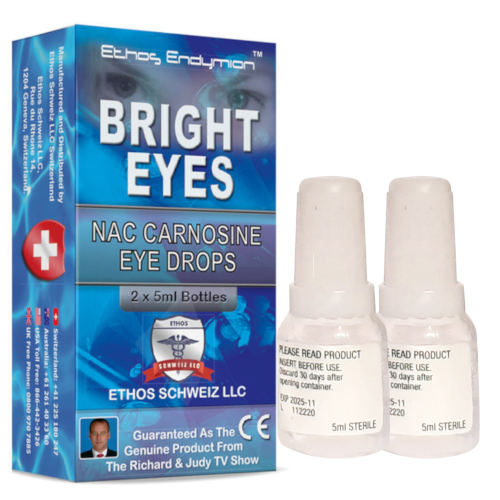
NAC Bright Eyes™ Drops
N-acetyl-carnosine is one of the few nutrients shown to penetrate the eye’s surface and deliver antioxidant support exactly where it’s needed most. Once inside the lens, it converts into L-carnosine — helping to counter oxidative stress and glycation, two of the primary drivers of age-related lens clouding.
This makes Bright Eyes™ a uniquely targeted approach for people beginning to notice glare, blur, or early visual discomfort.
Benefits:
-
-
Delivers N-acetyl-carnosine directly to the lens
-
Converts into L-carnosine inside the eye for deeper support
-
Helps defend against glare sensitivity and early lens opacity
-
👉 Learn More About Ethos Bright Eyes™ NAC Drops
👉 Buy Ethos Bright Eyes NAC Eye Drops
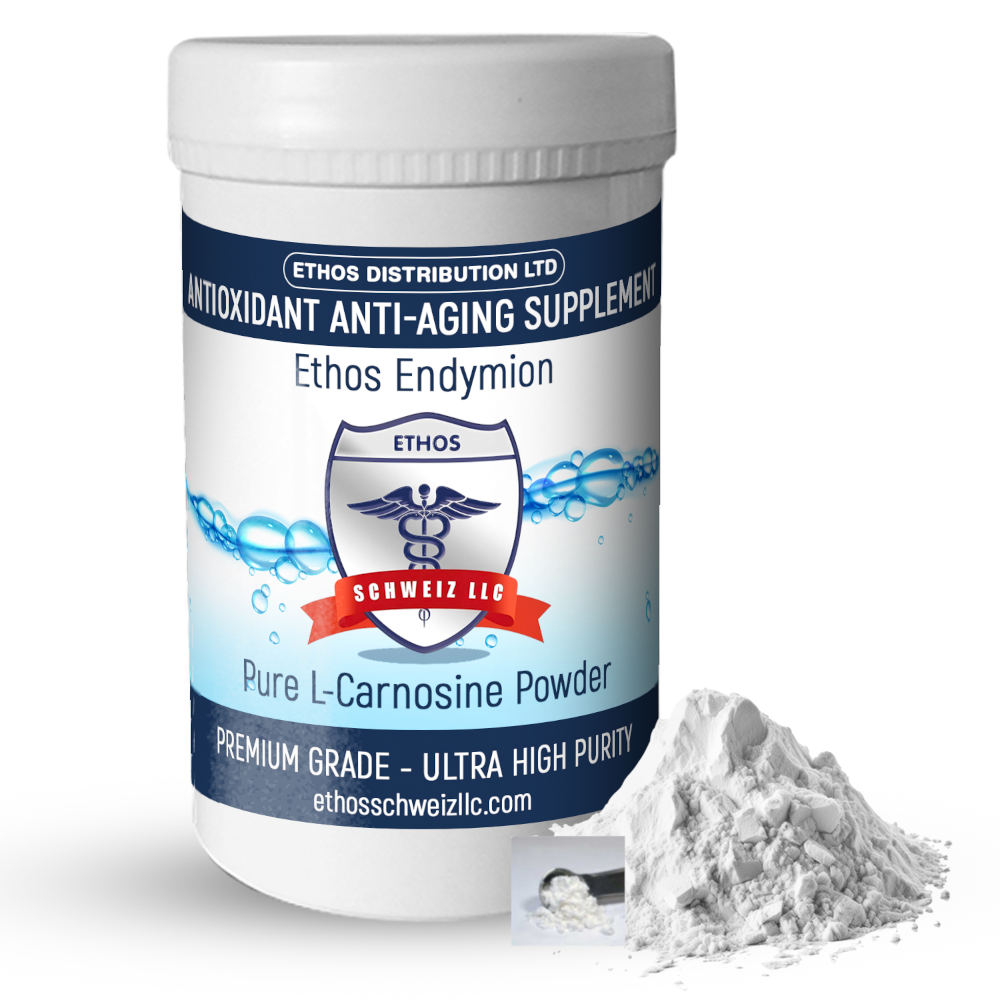
Pure L-Carnosine Powder
L-carnosine works at the cellular level, helping protect eye proteins from stiffening, cross-linking, and glycation damage — changes strongly associated with cloudy lenses and tired eyes. It also helps buffer oxidative stress throughout the body, supporting high-energy tissues like the retina, brain, and nerves.
For anyone concerned about ageing eyes or lens clarity, pure L-carnosine is one of the most effective nutrients available.
Benefits:
-
Protects proteins from glycation and long-term damage
-
Helps neutralise oxidative stress in high-energy cells
-
Supports lens clarity, retinal resilience, and overall cellular vitality
👉 Explore Ethos Pure L-Carnosine Powder
👉 Buy Ethos Pure Carnosine Powder
Lutein & Zeaxanthin
These carotenoids concentrate naturally in the macula — acting as internal “sunglasses” that filter harmful blue light and protect against oxidative stress at the centre of your vision. The AREDS2 clinical trials confirmed their importance for long-term retinal health and for slowing the progression of age-related macular degeneration.
By replenishing these pigments through targeted supplementation, Ethos helps support sharper vision, healthier contrast sensitivity, and stronger macular defences.
Benefits:
-
Boost macular pigment density for central-vision protection
-
Improve glare recovery, contrast sensitivity, and visual comfort
-
Filter blue light and reduce oxidative stress in the retina
👉 Discover Lutein & Zeaxanthin for Macular Health →
👉 Buy Ethos Lutein and Zeaxanthin
Marine Phytoplankton Compounds
Marine phytoplankton is one of nature’s most bioavailable sources of trace minerals, essential fatty acids, chlorophyll, and the antioxidant enzyme superoxide dismutase (SOD) — a crucial first-line defence against cellular ageing. These nutrients nourish the retina and support microcirculation to delicate ocular tissues, helping counter dryness, fatigue, and environmental strain.
Working at the deepest level of the cell, phytoplankton supports not only the eyes but also the body’s overall metabolic and antioxidant balance.
Benefits:
-
Provides SOD, trace minerals, and essential fatty acids for deep cellular support
-
Helps reduce eye fatigue, dryness, and oxidative stress
-
Supports mitochondrial energy and microcirculation in retinal tissues
FAQ: Your Most Common Questions Answered
Why are my eyes aging so quickly?
Eyes age faster than many tissues because:
-
Retinal photoreceptors have extremely high metabolic demand.
-
The lens does not shed its cells — damage accumulates over decades.
-
High exposure to light/oxygen + frequent sugar fluctuations + UV = faster damage.
-
If nutrition or antioxidant support is low, those stresses have bigger impact.
How can I stop my eyes from aging?
You can’t stop aging, but you can significantly slow the aging of your eyes by:
-
Protecting from oxidative stress and glycation
-
Ensuring good nutrition (lutein/zeaxanthin, carnosine)
-
Supporting eye-specific supplements such as NAC drops
-
Managing blood sugar, avoiding heavy UV exposure, protecting from blue light
-
Maintaining retina health (because it uses massive energy)
Can you fix aging eyes?
Yes — many signs of eye “aging” can be improved:
-
Dryness, irritation, and discomfort can be relieved with proper care
-
Early lens clouding and oxidative stress effects can be mitigated (with NAC drops, carnosine)
-
Visual functions like contrast sensitivity and glare recovery can improve (with lutein/zeaxanthin)
But: you can’t fully “reverse” deep structural damage or replace professional medical treatment when needed. The aim is to restore function and slow further aging, not promise perfection.
How to reverse aging eyes naturally?
While “reverse” is a strong word, studies show you can improve cataracts and some age-related eye disorders.
You can enact a natural protocol to regain healthier eye, improve function and slow further decline:
-
Use NAC eye drops (to protect and repair lens proteins)
-
Take Pure L-Carnosine powder (to buffer glycation and support high-energy tissues)
-
Supplement with lutein & zeaxanthin (for macular pigment health, blue-light protection filter, powerful antioxidant)
-
Consider marine phytoplankton/derived compounds (as emerging support for ocular antioxidant networks)
-
Protect from UV and blue light, maintain stable blood sugar, eat a nutrient-rich diet, ensure antioxidant status, avoid smoking, manage overall health
Ethos Pure Carnosine — A Legacy of Real Science and Early Pioneers
When it comes to carnosine, Ethos Vision didn’t follow a trend — we were built on the work of the scientists who helped the world understand its true anti-aging potential.
In the mid-1990s, Professor Steven Gallant and Dr. Alexander Boldyrev conducted a landmark study using senescence-accelerated mice.
The results were remarkable: carnosine-fed mice lived ~20% longer, stayed more active, and showed fewer signs of aging.
Their research proved that carnosine helps:
-
Protect proteins from cross-linking
-
Reduce oxidative stress
-
Support healthy enzyme function
From 2003 onward, Professor Gallant collaborated directly with Ethos Vision’s founders, presenting research at conferences and inspiring our original formulations. His pioneering work still guides our mission.
Ethos carnosine products later appeared in the Daily Telegraph’s “Top Ten Foods to Boost Brain Power,” highlighting L-carnosine’s role in supporting cognitive and cellular health.
Together, these two milestones — scientific heritage and mainstream recognition — define Ethos Vision’s products as effective and trusted.
When you choose Ethos Pure L-Carnosine Powder, you’re choosing:
-
A product inspired by the scientists who discovered carnosine’s anti-aging potential
-
A trusted formula recognised by national media
-
A company built on a 20-year scientific foundation
Discover “Why Carnosine Purity Matters”
Conclusion: Support the Hardest-Working Cells in Your Body
Your eyes deteriorate with age not because they are weak —
but because they work harder than almost any other part of you.
Photoreceptors burn immense energy, renew themselves daily, and face constant exposure to light and oxygen. Over time, oxidative stress, glycation, and mitochondrial decline naturally begin to take their toll.
Reassurance for Your Eye Health — and a Gentle Warning
If early eye issues are ignored, high-energy retinal cells begin to struggle:
-
slower focusing
-
reduced contrast
-
increased macular stress
-
faster loss of visual sharpness
-
tired, strained eyes that recover more slowly
Because these cells consume so much energy, once mitochondria weaken, ageing accelerates quickly in retinal tissue.
The Good News
With the right support — especially antioxidants, macular pigments, and carnosine —
your eyes can remain clearer, more comfortable, and more resilient as the years go by.
Supporting your eyes today is one of the simplest, most powerful ways to protect your vision for tomorrow.
Scientific References (Clickable Headings)
1. Retinal Energy Demands & Vascular Supply
https://pmc.ncbi.nlm.nih.gov/articles/PMC5963988/
2. Mitochondrial Dysfunction in the Aging Retina
https://www.mdpi.com/2079-7737/8/2/31
3. Oxidative Stress and Cataract Formation
https://pmc.ncbi.nlm.nih.gov/articles/PMC5611842/
4. Antioxidants and Eye Aging Review
https://www.mdpi.com/2076-3921/13/10/1249
5. N-Acetylcarnosine Cataract Study (PubMed)
https://pubmed.ncbi.nlm.nih.gov/12001824/
6. Cochrane Review: NAC Drops for Cataracts
https://pmc.ncbi.nlm.nih.gov/articles/PMC6464029/
7. Carnosine Anti-Aging Mechanisms
https://www.science.org/doi/10.1126/sageke.2005.18.pe12
Important
This article is for educational purposes only and is not a substitute for medical advice. If you have a diagnosed eye disease (retinal problems, glaucoma, advanced cataract), diabetes, sudden vision change or any eye-symptom of concern, please consult your optician/ophthalmologist/GP.